 NexGPU-算力租赁,GPU服务器,GPU云算力,AI服务器租用-新闻博客
In the recent AI development community, many teams renting high-performance GPUs focus almost entirely on the GPU's VRAM and stream processors. However, a silent yet dramatic transformation is happening at the hardware level. If you still assume that simply renting a card will deliver theoretical peak performance, the upcoming data and trends may overturn your beliefs. And in the GPU leasing market, choosing the optimal hardware combination for your team is becoming increasingly complex.
Today, research firm IDC released its latest AI infrastructure tracker report, showing Q1 global AI infrastructure spending surged 33% year-over-year to $89.7 billion. More notably, in rack-scale GPU servers, Arm-based processors have surpassed traditional x86 for the first time, becoming the absolute workhorse for accelerated computing.
When Arm Becomes the Foundation: GPU Leasing Priorities Are Quietly Shifting
IDC has also raised its full-year 2026 AI infrastructure market forecast to $497 billion, a nearly 56% year-over-year increase. This means AI servers are no longer just about GPUs; the underlying CPUs and system architectures are undergoing a complete overhaul.
Why is this shift happening? During inference, high concurrency, multimodal processing, and frequent agent loops place extreme demands on data throughput and single-core CPU efficiency. Traditional x86 architectures often become bottlenecks, dragging down GPU performance due to PCIe bandwidth and power constraints in dense GPU clusters.
In contrast, Arm-based processors like the NVIDIA Grace CPU are tightly coupled with GPUs, offering up to 900 GB/s bidirectional bandwidth, which significantly improves first-token latency for large models. In the cloud computing market, developers experimenting with the latest chips have discovered that Arm+GPU combinations deliver significantly better price-performance for complex inference tasks.
The $4.55 Billion Capital Rush: The Heavy-Asset Game in GPU Leasing
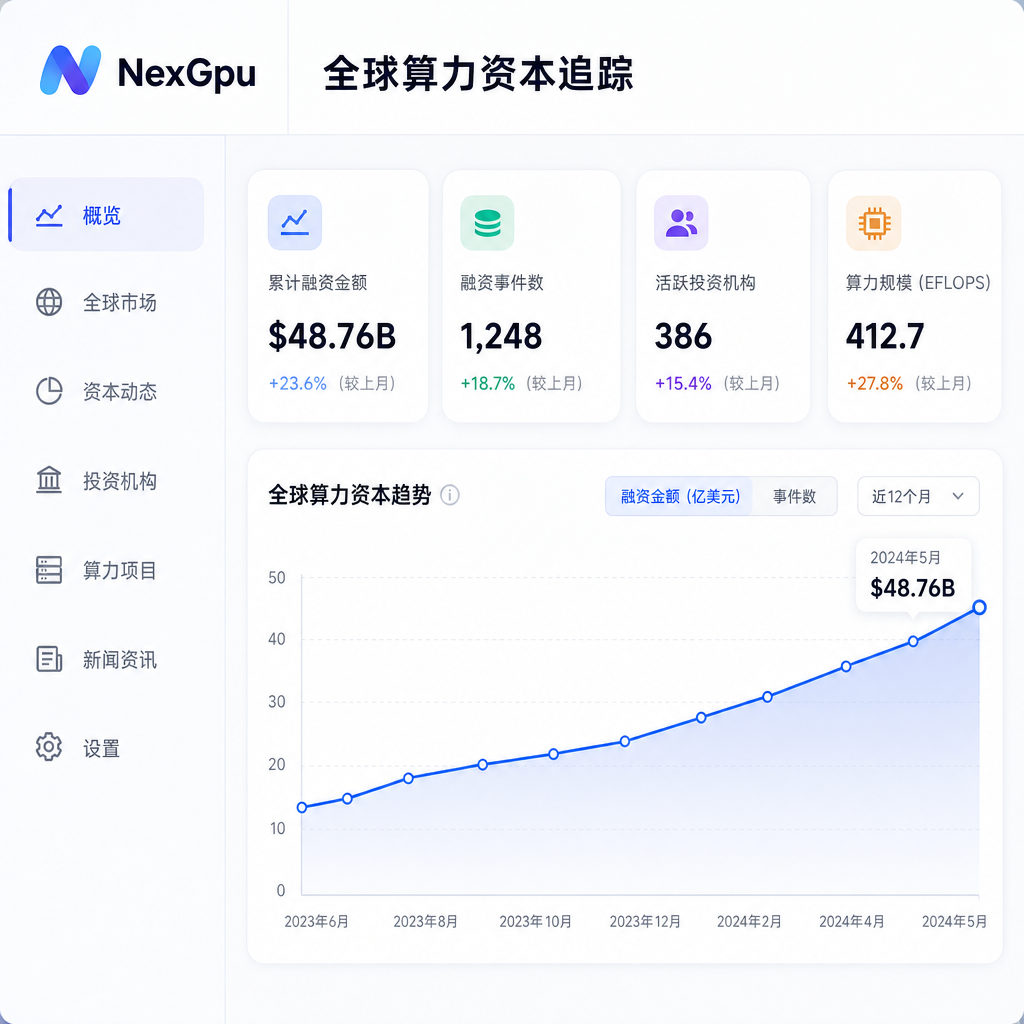
Beyond hardware architecture shifts, the capital structure behind the computing market is also transforming. According to the latest GPU cloud industry analysis, as of early July 2026, dedicated GPU cloud platforms worldwide have raised a total of $4.55 billion through 14 equity financing rounds. In the same period last year, this figure was only $1.02 billion.
This is not just about numbers; it reflects a shift in industry logic. Among this year's 14 funding rounds, 11 exceeded $50 million. The most notable was Nscale's $2 billion Series C, which alone accounted for 44% of the total funding this year.
These figures reveal a clear message: GPU leasing has completely moved away from the "workshop" era of piecemeal assembly and evolved into an infrastructure-level heavy-asset game that is extremely capital-intensive. The extreme concentration of capital means that only platforms with strong financial backing and supply chain bargaining power can consistently provide the latest generation of computing power.
Real-World Cost Comparison: Making Optimal Choices in a 3x Price Range
Given the concentration of capital and rapid hardware updates, how should development teams make practical decisions when it comes to their bills? According to the latest cloud GPU rental price index released in mid-July, the price disparity for mainstream GPUs like the H100 in the current market is extremely wide:
- Hyperscalers: On-demand rental prices typically range from $6.88 to $7.00 per hour. While these platforms offer mature ecosystems, they are prohibitively expensive for teams without long-term prepayment commitments.
- Specialized GPU Clouds: Offering high-availability services at prices between $2.00 and $3.59 per hour, providing significant cost-performance advantages.
- Spot & Community Tiers: Prices can drop to around $1.65 per hour, suitable for non-real-time asynchronous tasks or offline testing, but they risk interruption at any time.
Behind this price gradient lies a multi-tiered, differentiated supply ecosystem in the GPU leasing market. Development teams must build flexible computing usage habits based on their specific task types, rather than blindly opting for the most expensive plans.
How Small and Medium AI Teams Can Build a Computing Moat in the Midst of the Giant Waves
Facing the projected $497 billion AI spending wave in 2026 and the architectural shift from x86 to Arm at the CPU level, small and medium AI teams that blindly purchase hardware not only face long lead times but also significant hardware depreciation risks. A reasonable approach is to leverage flexible GPU leasing solutions.
On the NexGpu platform, development teams can flexibly configure hybrid computing packages. For long-term foundation model fine-tuning, you can use monthly or quarterly dedicated instances; for bursty multi-agent inference testing, you can rent elastic GPU clusters on demand via API.
When choosing a leasing platform, you should not only look at the hourly rate of a single GPU card but also consider the underlying CPU architecture, memory bandwidth, and the platform's network stability. In the new cycle where Arm servers dominate, choosing compute instances that support high-performance CPU-GPU direct connection can often prevent your GPUs from idling during high-concurrency requests, thereby saving significant costs.



Comments(0)