 NexGPU-算力租赁,GPU服务器,GPU云算力,AI服务器租用-新闻博客
If your AI development team just launched a new model last week, the frequent price adjustment notices from cloud providers these days might disrupt your compute budget plans for the second half of the year. For AI teams heavily reliant on external infrastructure, when searching for suitable GPU rental services, you must not only face rapidly evolving technology but also guard against hardware supply chain fluctuations directly impacting your final bills.
Just this week, cloud infrastructure provider DigitalOcean announced a notable price adjustment plan. Starting August 1st, the platform will increase rental prices for some mainstream GPU instances. Among them, the on-demand prices for the widely favored NVIDIA H100 and H200 instances both rose by about 30%. This wave of cloud compute price hikes has led many teams that were hoping for lower compute costs to start re-evaluating their architecture and financial budgets.
Compute Market Sees Price Surge: What Does Cloud Host Price Adjustment Signal?
According to public adjustment details, starting next month, the on-demand price for NVIDIA H100 instances on the platform will rise from $3.39 per hour to $4.41 per hour. The more powerful H200 instance also rises to $4.47 per hour. Even the AMD MI300X instance sees its on-demand rental price increase to $2.59 per hour.
Not only on-demand instances, but also new or renewed 12-month subscription users will face higher monthly or annual prices. Although users within existing contract periods are temporarily unaffected, research teams running long-term training tasks will face nearly 30% higher compute expenses upon renewal.
In fact, this is not the first time major cloud providers have tested users' tolerance limits. As early as January this year, AWS quietly raised instance prices by 15%. This breaks the traditional pattern in the cloud computing industry where compute unit prices continuously decline with hardware iteration. Most startups can only turn to the GPU rental market for more flexible alternatives.
Analyzing This Price Fluctuation: Why Are High-End Compute Rental Prices Rising Instead of Falling?
The underlying logic driving this round of price increases primarily stems from tight global upstream supply chains. Although consumer-grade hardware prices have slightly eased, enterprise-grade compute hardware still faces severe supply bottlenecks. With NVIDIA about to mass-produce its Rubin architecture platform, a significant amount of High Bandwidth Memory (HBM) capacity is locked in, making it difficult for memory fabs like Samsung and SK Hynix to alleviate the shortage of enterprise-grade storage chips in the short term.
Against the backdrop of limited hardware supply, large enterprises are still locking in high-end compute through long-term, high-value contracts. Just this week, AI compute service provider KIDZ AI announced a five-year compute service agreement with Canopy Wave valued at $44.6 million. The core of this agreement is the deployment of a dedicated compute cluster composed of 256 NVIDIA Blackwell B300 GPUs.
This five-year order reflects the defensive land-grabbing of compute resources by leading enterprises. Large companies monopolize scarce high-end GPUs through long-term contracts, leaving small and medium-sized R&D teams with the remaining, highly volatile retail compute market. This supply-demand asymmetry leaves small teams with almost no bargaining power when faced with unilateral price hikes from cloud providers.
Under Multiple Pressures: How Can Small Teams Optimize GPU Rental Spending?
Facing rising cloud costs, blindly renting high-spec servers is no longer viable. For R&D teams with limited budgets, NexGpu can help mitigate price fluctuations by integrating fragmented compute resources globally, offering developers cost-effective GPU rental options.
Beyond finding more cost-effective platforms, developers can also adopt the following optimization strategies in their daily architecture design to reduce bills:
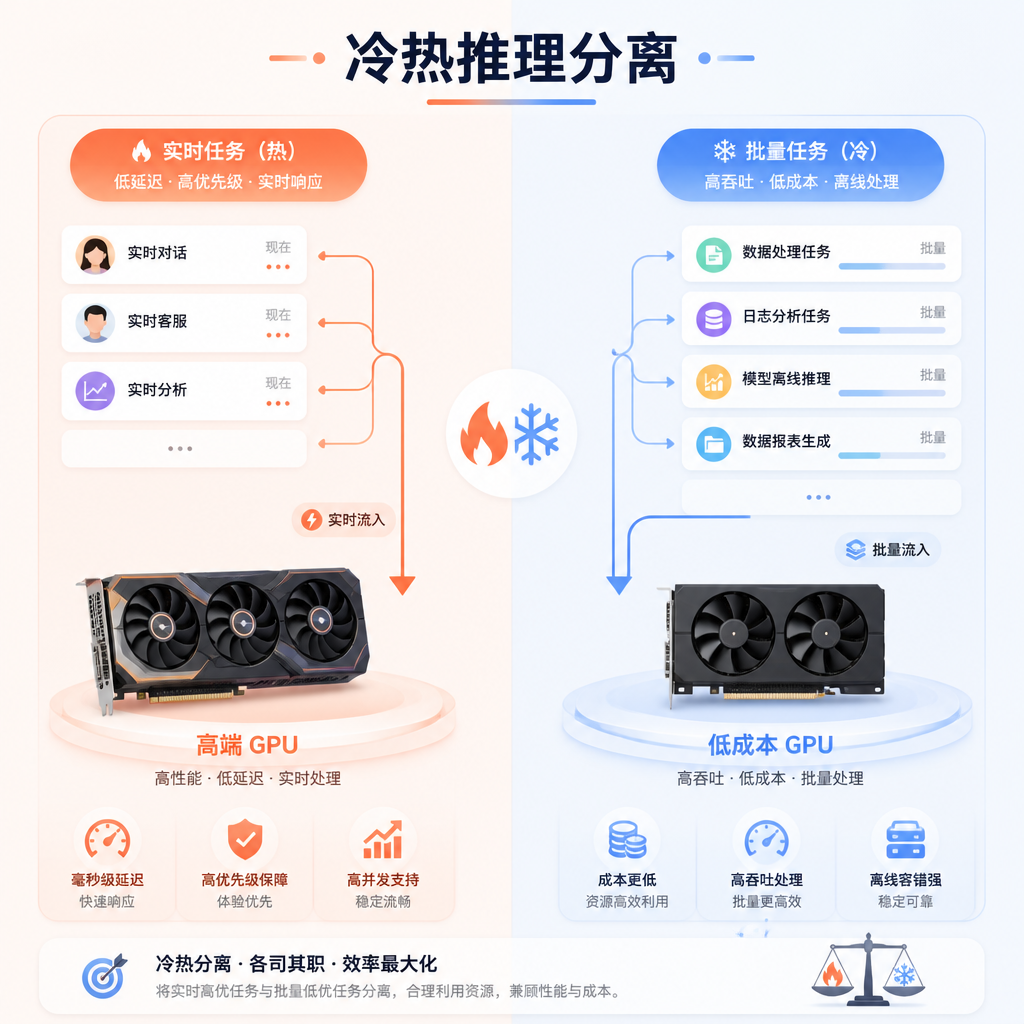
- Implement Hot/Cold Inference Separation: Schedule non-high-concurrency, non-real-time batch tasks (such as data cleaning or offline analysis) to lower-cost GPUs, keeping only core real-time inference tasks on high-end cards.
- Mix Chips from Different Brands as Needed: Some inference tasks that do not heavily rely on a specific ecosystem can be migrated from the expensive NVIDIA ecosystem to the AMD platform, which offers higher cost performance and a smaller price increase this time.
- Introduce Mid-Short-Term Contracts to Lock Prices: For projects with clear development cycles, sign 3 to 6-month subscription contracts before broad price hikes to avoid sudden premiums from on-demand billing.
- Fine-Tune Memory Utilization: Use model quantization techniques to reduce memory usage, enabling a single card to handle more concurrent requests, indirectly reducing the number of servers rented.
From the Five-Year Deal to AI Infrastructure: Fine-Grained Compute Operation Becomes a Trend
Looking at recent industry dynamics, besides price increases, another obvious shift is that AI compute is moving from early-stage extensive stacking to fine-grained operation. Even large-scale compute deployments now emphasize deep software-hardware collaboration.
Take the recently disclosed 32 specialized compute nodes as an example. Each node, besides being equipped with chips, also includes dual-socket processors, 4TB of memory, and 800Gbps InfiniBand network connectivity. This indicates that focusing solely on GPU compute power is insufficient; the overall network transfer throughput and memory data exchange efficiency of the system are becoming decisive factors in the actual inference speed of large models. This means future GPU rentals are not just about buying compute power but also about buying network and storage.
With the cloud price surge now a given, small teams can no longer rely on hardware vendor price reduction dividends. Instead, they need to respond through more flexible scheduling mechanisms. NexGpu will continue to optimize compute scheduling algorithms to ensure that small and medium-sized enterprises do not fall behind in the compute race due to excessive bills. Future competition will place greater emphasis on who can extract higher system operational efficiency within limited resource budgets.




Comments(0)