 NexGPU-算力租赁,GPU服务器,GPU云算力,AI服务器租用-新闻博客
Last week, the tech world was flooded with staggering compute bills. Meta is in talks with Anthropic over a cooperation worth up to $10 billion, while SpaceX is also leveraging its massive GPU clusters to offer extensive compute rental services to giants like Google.
Just a few days ago, on July 21, AI cloud service provider GMI Cloud announced that its signed Annual Recurring Revenue (ARR) had surpassed $500 million. These major events send a clear signal: as the competition for large models intensifies, compute resources are increasingly centralizing in the cloud.
However, the billion-dollar bets of tech giants don't alleviate the anxiety of small and medium teams when choosing solutions. Facing bare metal, virtualized cloud instances, and serverless architectures, how should ordinary developers choose the most suitable GPU rental plan?
Bare Metal GPU: The Destination for Extreme Performance and Deep Customization
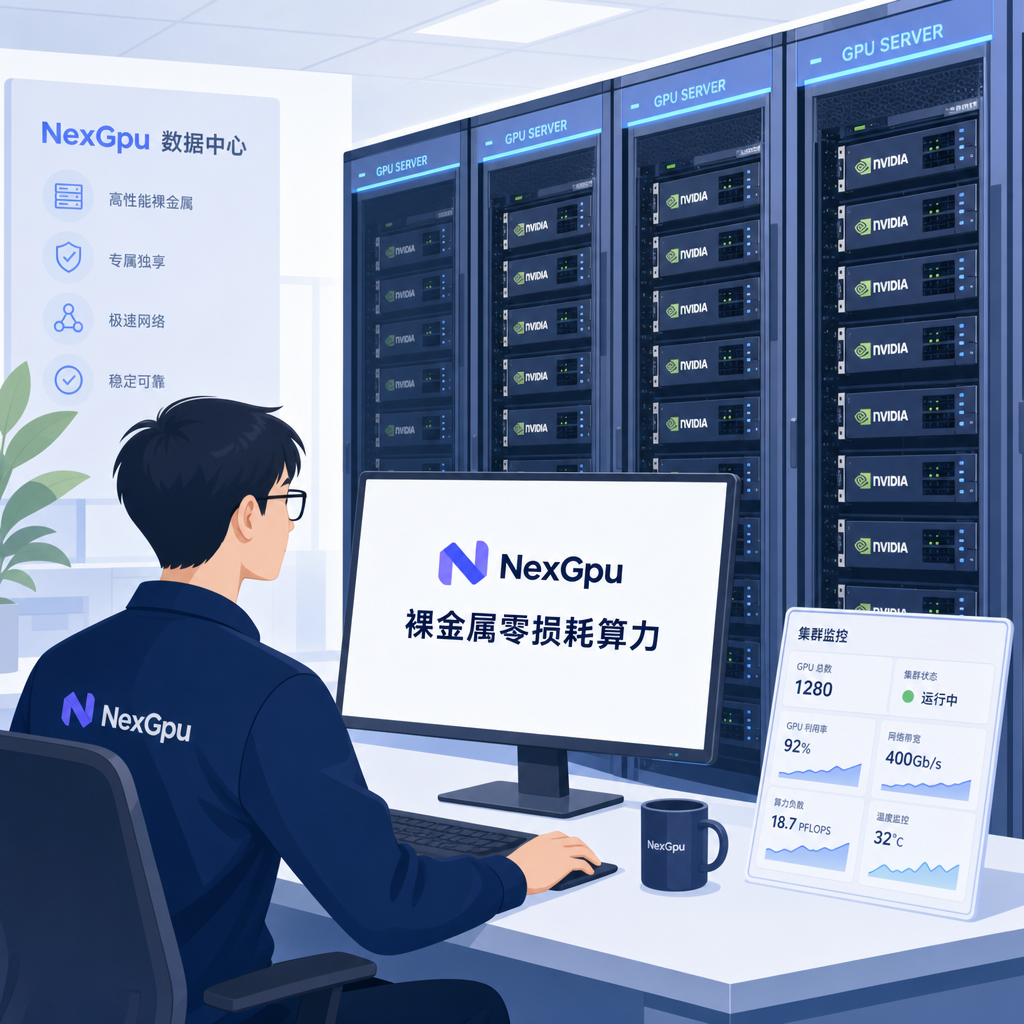
Bare metal solutions involve renting fully physically isolated machines. This architecture bypasses any virtualization layer (hypervisor), allowing the software stack to communicate directly with the physical GPU hardware and high-speed network interconnect (InfiniBand).
In the pre-training phase of machine learning, even a 3% virtualization performance loss can accumulate into significant financial waste over weeks of computation. The biggest advantages of bare metal are "zero performance loss" and "ultra-low communication latency."
Especially when using NVIDIA's thousand-card or ten-thousand-card clusters for distributed training, the communication efficiency between cards determines the overall computing speed. Bare metal can fully unleash the performance of network devices, avoiding computation waits caused by virtualized network interfaces.
Of course, this solution has obvious drawbacks. Its entry threshold is very high, typically requiring renting an entire machine or even an entire rack. For development teams, configuring underlying drivers, container environments, and monitoring networks is a significant operational burden.
In NexGpu's observation, bare metal is only the most cost-effective solution for scenarios like continuous pre-training of models with tens of billions of parameters, or when extreme fine-tuning of network topology is required.
Virtualized Cloud Instances: The Balance Between Elasticity and Operational Convenience
Virtualized cloud instances (VMs) are currently the most common form of cloud GPU hosting. By adding virtualization software on physical machines, providers can allocate one or more GPUs to different users, supporting billing by the hour or even by the second.
For most teams in fine-tuning and medium-scale inference, this solution eliminates the complex setup process. You can launch an instance with major deep learning frameworks (like PyTorch) pre-installed within minutes, ready to use.
In terms of flexibility, virtualized instances are almost unbeatable. If you need one GPU today for small model debugging and four GPUs tomorrow for medium-scale fine-tuning, you can adjust the configuration with a single click in the management console, and the environment changes are completed within minutes.
However, virtualization introduces slight performance overhead. Additionally, because multiple tenants share the underlying physical server hardware, occasional "noisy neighbor" effects can cause fluctuations in the execution time of compute tasks.
Serverless GPU: A Cost-Reduction Tool for Handling Peaks and Valleys
If your team's business primarily involves model inference for end users, and daily active users fluctuate significantly, serverless GPU architecture shows unique advantages.
The core logic of serverless architecture is "provision on demand, destroy after use." When there are no requests, GPU rental charges drop to zero; when user requests surge, the system pulls up containers within seconds to complete inference tasks.
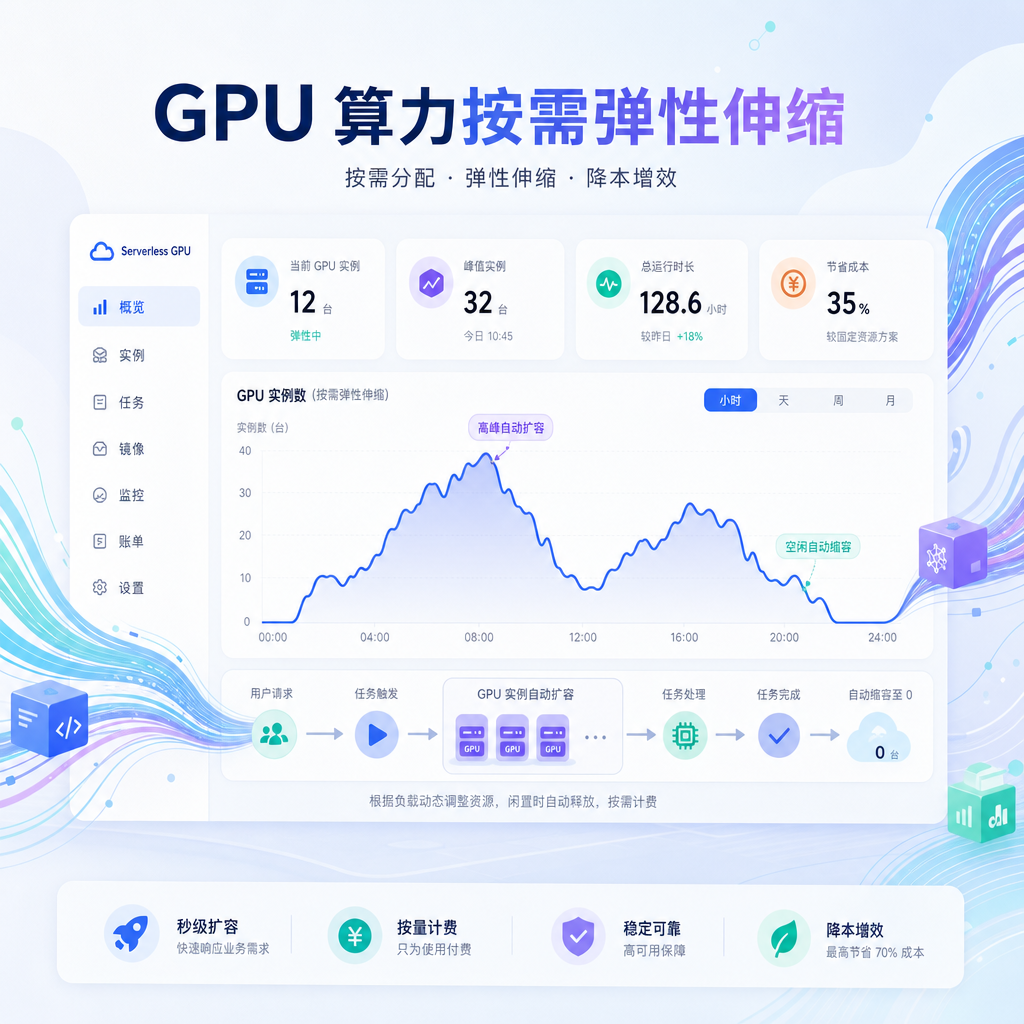
This elasticity is particularly suitable for independent developers or early-stage startups. For example, when running image generation or intelligent customer service APIs, if no users access at night, the system incurs no GPU rental costs, significantly reducing operational expenses.
This model eliminates the pain of paying for idle GPUs. However, its main pain point is cold start latency. If the model is large, loading parameters into VRAM for the first time may take seconds or even tens of seconds, which is unacceptable in real-time interactive scenarios.
Three Core Dimensions for Choosing GPU Rental Solutions
Facing these distinct architectures, technical teams should not focus solely on the hourly price. Consider the following dimensions comprehensively to find a solution that truly fits your business expectations:
- Duration of tasks: If the task is continuous training lasting months, the lossless efficiency of bare metal saves more compute time; if it's intermittent or testing tasks, on-demand elastic rental is more cost-effective.
- Data transfer costs: GPU computing involves not only the card price but also the bandwidth costs for data input and output. High data transfer fees can often become a hidden billing surprise.
- Team's operational expertise: Do you have dedicated Site Reliability Engineers (SREs) to manage bare metal networking and storage? If not, managed cloud instances can prevent your team from falling into technical debt.
- VRAM capacity and model size: When running larger open-source models, the amount of VRAM directly determines whether they can run. It's essential to prioritize matching VRAM rather than just raw compute performance.
For growing teams, overemphasizing a single architecture often leads to premature optimization. In the early stages of a project, using virtualized cloud instances to quickly validate your business, and then migrating based on performance bottlenecks, is a more prudent path.
NexGpu suggests that teams can try splitting different tasks across different compute nodes. For example, use more stable instances for long-cycle fine-tuning, and distribute sudden testing or temporary inference to on-demand nodes, thereby maximizing the use of every bit of compute.



Comments(0)