 NexGPU-算力租赁,GPU服务器,GPU云算力,AI服务器租用-新闻博客
In recent weeks, the hottest news in the cloud computing power market has been Meta advancing its "Meta Compute" initiative. As soon as the news broke, related stocks saw significant fluctuations. Simply put, Meta plans to offer its excess AI computing power externally, either through managed model access or direct rental of raw GPU resources. This isn't unfounded—the company's CEO previously mentioned similar ideas at shareholder meetings, and now it's progressing to concrete business levels. Meta is simultaneously building large-scale self-owned infrastructure and renting vast amounts of GPUs externally, with cumulative commitments not small in size. Now considering selling surplus capacity indicates that big tech's computing layout has reached a phase of "both in and out."
What does this mean for small and medium-sized teams? There could be an additional player on the supply side, intensifying competition, and in some scenarios, bargaining space may open up. But don't get too excited. The real demand driver is the explosion of agentic AI workloads. Previously, the norm was inferencing after model training, with token costs continuously falling—many assumed that new chips would cause old card prices to crash. The reality is different: models are more efficient, producing more tokens per unit of compute at higher quality, resulting in a surge in usage. This is a classic Jevons paradox—efficiency gains lead not to demand contraction but to an explosion of use cases. Agents aren't single-turn Q&A; they involve multi-step reasoning, tool calls, sub-agent collaboration, and long-horizon state retention, easily multiplying token consumption several-fold or even tenfold. Compute demand becomes less price-sensitive because the ROI is too obvious.
Market data confirms this. The AI GPU rental market has grown from approximately $3.3 billion in 2023 to over $7 billion by 2026, with longer-term projections aiming even higher, boasting a substantial compound annual growth rate. On-demand prices for mainstream cards like the H100 currently range from roughly $2 to $11 per hour, with significant variation among providers; the A100 is more affordable, starting around $1 and going up to about $5; the latest Blackwell series B200 commands higher prices, with a median around $6 and tight supply. Prices for new-generation cards have roughly doubled over the past year, mainstream cards remain relatively stable, and older cards continue to decline. Trends for one-year contracts and on-demand prices aren't perfectly aligned; long-term lock-ins sometimes offer less discount than before, as providers gain confidence in future demand.
Domestic teams facing this situation need not panic, but they must adjust their thinking. The old "stockpile cards, train, then shut down" model is less applicable in the agentic era. Agents typically run continuously with fluctuating loads and significant CPU orchestration pressure. Previously, a CPU:GPU ratio of 1:4 to 1:8 might suffice; now many scenarios lean toward 1:1 or even higher, as planning, retrieval, tool calls, security checks, and data movement consume general-purpose compute. If your rented instance lacks sufficient CPU cores, GPUs will idle, wasting money.
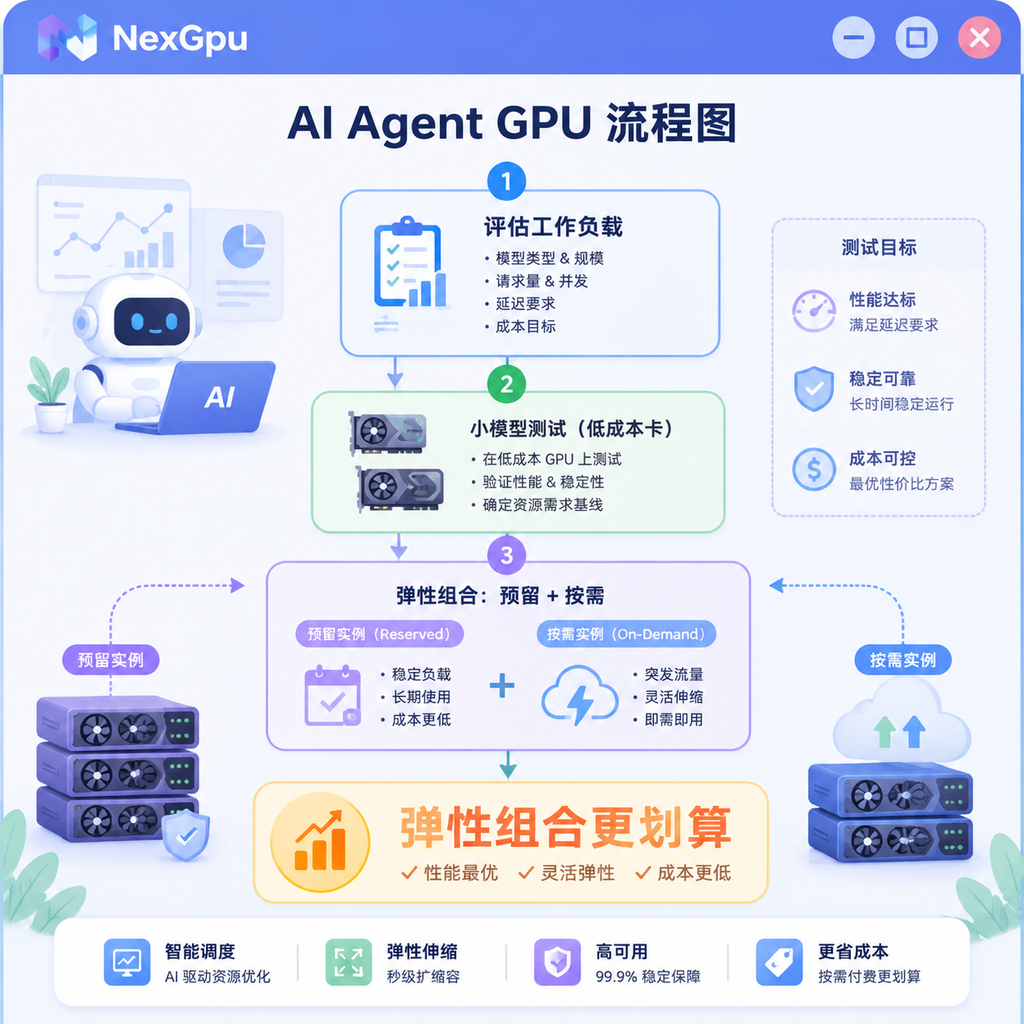
In practice, the first step is to understand your workload thoroughly. Don't rush into H100 or B200 from the start. First, run multi-agent workflows on cheaper cards with smaller models or quantized versions, testing real token throughput, latency, and CPU utilization. Many teams find that for 7B-30B scale agents, A100 80GB or H100 suffice, as memory and bandwidth can handle KV cache; for larger or memory-sensitive cases, consider cards with large memory like H200 or MI300X. B200 currently has limited supply and a significant price premium, reserved for training or massive-scale inference. Platforms like NexGpu offer flexible options across multiple specs, conveniently allowing you to quickly transition from single-card testing to multi-card production without committing to the priciest hardware upfront.
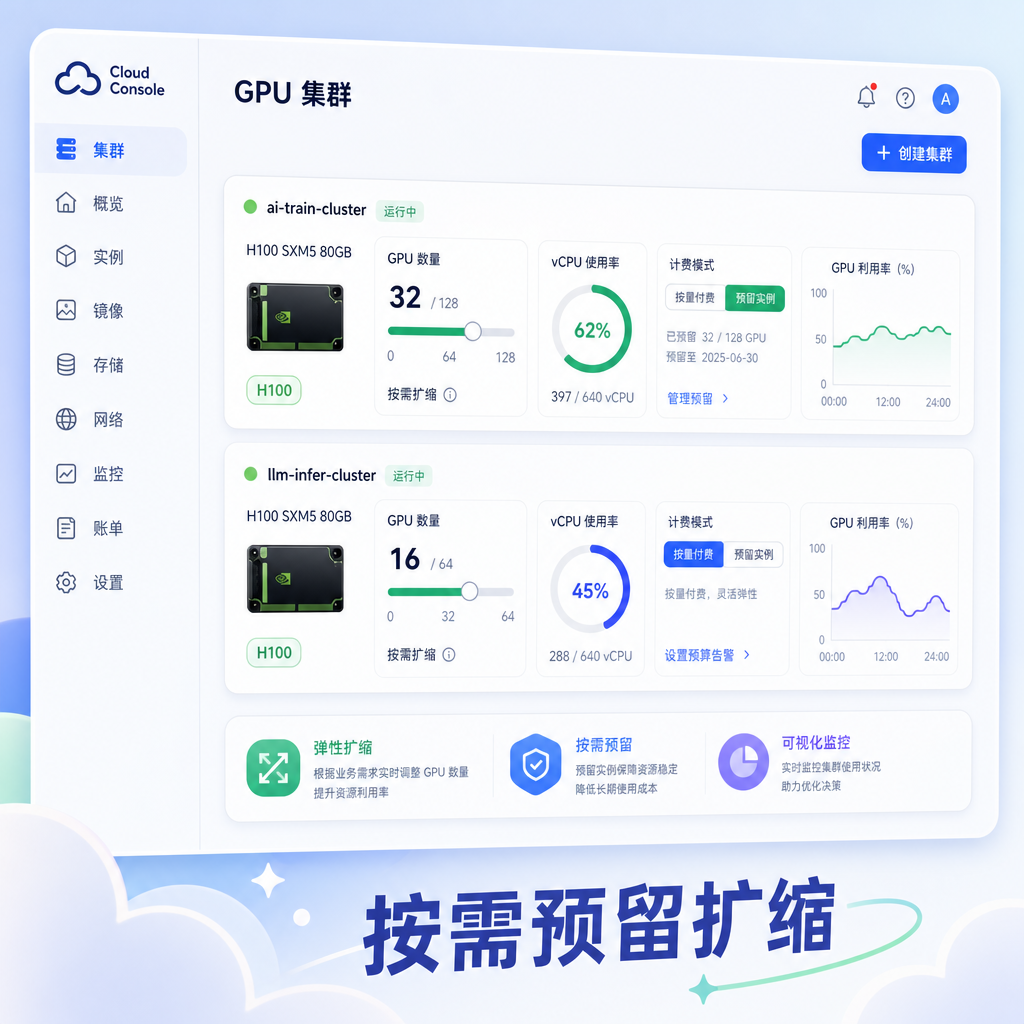
Step two: Flexible combinations are more cost-effective than "all-inclusive buyout." Use reserved or long-term contracts with discounts for baseline load, and on-demand or spot instances for peaks. Agent traffic often peaks during the day and drops at night, or spikes during events. Pure on-demand burns money, while pure reserved wastes resources. Many providers now support minute-level billing, instant scaling, and even sleep/wake modes to minimize idle time. Monitoring is key—don't just watch GPU utilization; also track CPU, network, and memory fragmentation. Inference clusters with utilization stuck at 20%-40% are common. The goal is to raise it above 50% through better scheduling frameworks (e.g., splitting prefill and decode, dynamic batching), so token costs truly come down.
Step three: Avoid common pitfalls. First, ignoring interconnect and storage. Multi-GPU training or large model sharding without high-speed interconnect (like NVLink or InfiniBand) will suffer performance degradation. Second, only looking at hourly rates, not total cost of ownership. Cold start times, data transfer fees, operational manpower, and failure recovery can add up to more than the card costs. Third, locking into long-term contracts without flexible exit clauses. The market moves fast; with Meta entering and new cards hitting the market, price structures will change. Fourth, inadequate CPU allocation or lack of checkpointing—if spot instances are reclaimed, you lose all progress. Agent chains are long, and losing intermediate state is more costly.
Example scenario: A medium-sized team building an internal multi-agent assistant previously used several A100s for fine-tuning but now needs to launch a persistent service. They start by spinning up a few A100s in the cloud for single-agent prototyping, validating tool calls and memory modules. After confirmation, they scale to an H100 cluster with sufficient vCPUs, use container orchestration for on-demand scaling, keep reserved instances for baseline, and add on-demand during peak events. Overall token costs are much more controllable than using a pure API, and data remains in a controlled environment. Another case is small research teams directly renting consumer-grade or mid-range cards for quantization experiments, then upgrading to professional cards after validation. NexGpu excels in such flexible switching scenarios, supporting a smooth transition from development to production and helping teams avoid environment configuration headaches.
How to handle price volatility? Don't chase trending cards. Mainstream H100/H200 have relatively ample supply and often offer better value. Compare actual available inventory from multiple providers rather than just list prices. Regional differences exist—some locations have cheaper electricity and more favorable network latency. Memory supply tightness is a current structural issue, with HBM capacity being absorbed by major AI orders, indirectly raising machine costs, but this affects renters less than buyers. Long-term, supply will catch up, but the incremental demand from agents won't easily disappear.
One final reminder: Big tech entry may increase supply pressure in the short term, but Meta is still aggressively expanding its own capacity, and external rental demand persists—it's not a simple "oversupply." What truly determines your costs is workload design, resource matching, and operational efficiency. Start small to validate the actual consumption of your agent chain, then scale elastically; plan CPU and GPU together; use a combination of on-demand and reserved; continuously monitor utilization. If you do these, cloud GPU rental can transform from a "money-burning pit" into a true business accelerator. Services like NexGpu, focused on compute elasticity, align perfectly with this fast-iterating, on-demand scaling rhythm, allowing small and medium teams to focus on models and applications rather than hardware procurement and operational chores.
The market is evolving rapidly; Meta's move is just one signal. Keeping pace with the load changes brought by agents is more important than obsessing over the price of a particular card. Get hands-on and test your agent chain—it's more practical than debating trends.


Comments(0)