 NexGPU-算力租赁,GPU服务器,GPU云算力,AI服务器租用-新闻博客
Rental prices for high-end cards like the Nvidia B200 have dropped more than 30% from recent highs, giving many small teams and individual developers an opportunity to deploy AI inference services. Over the past six months, training demand has driven up overall compute costs; now that prices are easing, it's a good time to focus more on inference optimization.
In practice, first assess your model size and concurrency requirements. For lightweight text generation or simple classification tasks, a single 4090 or A100 can handle the load; for video understanding or multimodal inference, multi-card parallelism is needed. Rental platforms typically offer hourly or monthly billing, so it's advisable to start with a small test environment for a few days, observe actual throughput and latency, and then decide on scaling.
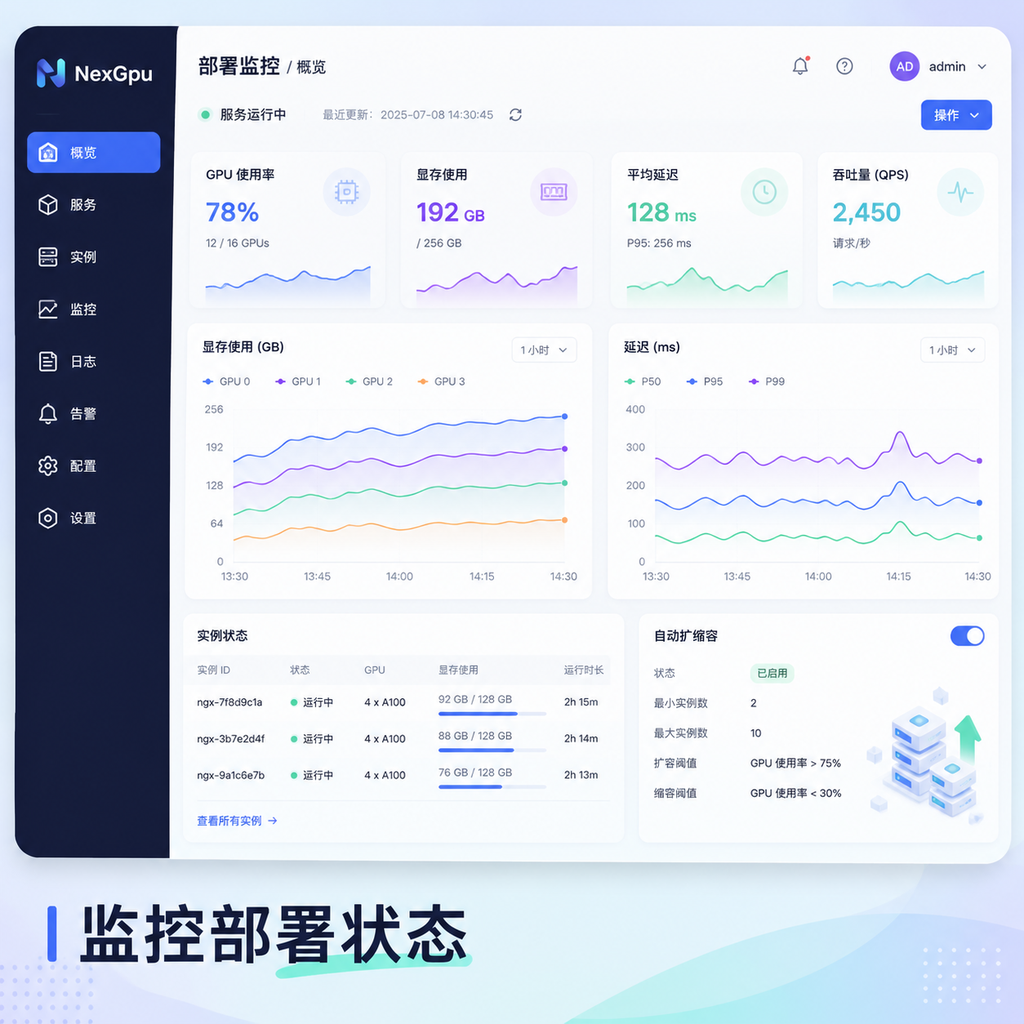
Deployment can be broken down into three steps. After connecting to the platform console, pull an image or upload model files directly. Many platforms come with pre-installed inference frameworks like CUDA, TensorRT, and vLLM, saving local compilation time. Next, configure auto-scaling rules: keep 1-2 cards during nighttime low traffic, and automatically scale up to 4-8 cards during daytime peaks. Finally, set up monitoring: integrate GPU memory usage, request latency, and error rates into Grafana or the platform's dashboard, and trigger alerts on anomalies.
There are several practical cost-saving tips. During the price drop, prioritize locking in monthly or quarterly plans, which can save an additional 15-25% compared to hourly billing. Also, enable idle card reclamation to release resources immediately after tasks finish, avoiding full-card charges. A university research group did this: they used rental services to get nearly 300 independent environments at once, students called resources on demand, deployment time dropped from several days to a few hours, and overall costs stayed within budget.
A common mistake is to only look at single-card prices and ignore network and storage. Inference services are latency-sensitive; when choosing nodes, prioritize data centers in the same region or with high-speed interconnects. For projects with large data volumes, pay attention to object storage costs—placing models and vector databases in the same availability zone can save cross-region traffic fees.
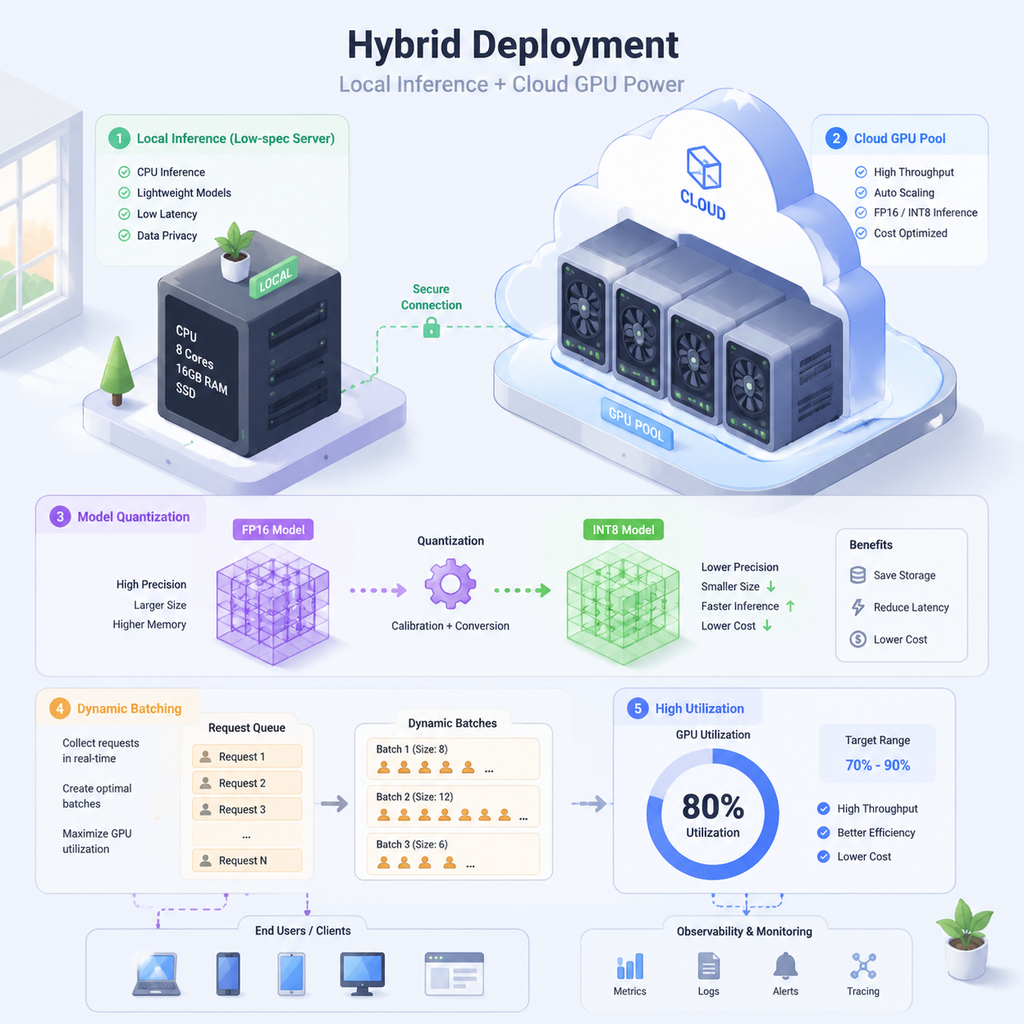
Hybrid deployment is also a mainstream approach in 2026. Keep sensitive data or high-frequency small requests on local low-end servers, and switch burst traffic to the cloud rental pool. Platforms generally support seamless API-level switching; just add a simple load balancing logic in your code. In practice, this can reduce monthly costs by more than 30% compared to full cloud, while maintaining the compliance advantage of keeping data on-premises.
Another practical detail is model quantization and batch processing. Converting FP16 models to INT8 or using AWQ quantization allows the same card to handle 1.5-2 times more concurrency. Combined with dynamic batching, requests pile up before batch inference, boosting GPU utilization from 40% to over 80% easily. Run several benchmarks with different batch sizes to find the sweet spot before going live.
Price drops don't mean permanently low prices; keep an eye on platform announcements and market trends weekly. Once demand for new cards like the B200 picks up, prices could rebound quickly. Stock up on common images and configuration scripts in advance so you can quickly switch card types or nodes when volatility hits.
NexGpu offers an elastic GPU pool for such scenarios, supporting seamless scaling from single-card testing to multi-card clusters. Users can flexibly adjust based on actual usage without long-term commitment. In real projects, many teams have used it for medical imaging inference and financial risk models, with good feedback on stability and ease of use.
Finally, don't forget security. Rental environments are isolated by default, but model weights and user data still need encryption in transit. Platforms typically support private networks and key management services; once configured, they can meet the compliance requirements of most small teams.
With these steps, small teams can definitely take advantage of the 2026 price window to run AI inference services via rental, controlling costs while maintaining iteration speed. The key is to validate on a small scale first, then gradually scale up—data speaks louder than any prediction.



Comments(0)